
Tips from a Mid-Century Modern–Inspired Renovation in Raleigh, NC (Before & After)
When people hear “mid-century modern renovation,” they often assume the home itself dates back to the 1950s or ’60s. This Raleigh home tells a different story—and that’s exactly what made the project so compelling.
The house was built in 2015, not during the mid-century era. However, its exterior clearly draws inspiration from mid-century modern architecture, with a low-pitched roof, strong horizontal lines, and detailing that’s anything but traditional. No gabled roofs here. Painted siding is paired with warm natural wood paneling, giving the home a modern profile with clear MCM influence.
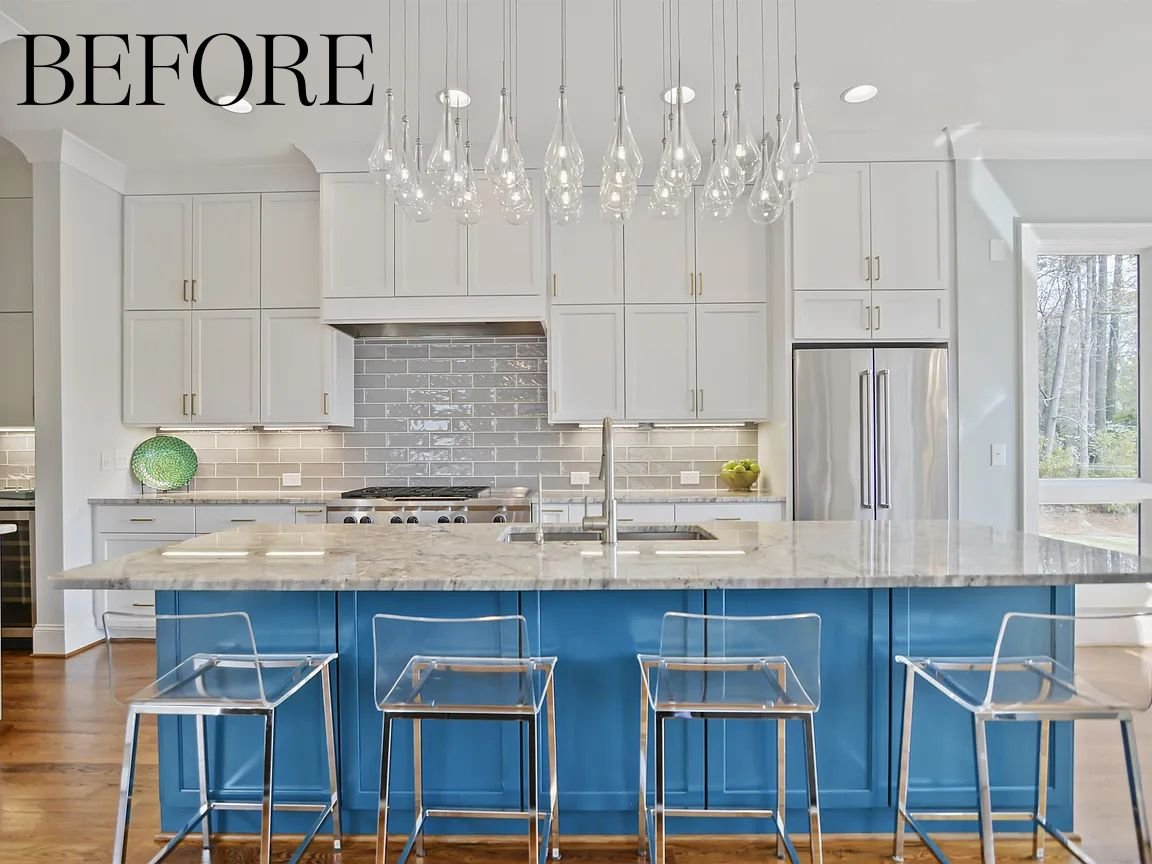
Inside, before the renovation, the home felt far more generic. The interiors reflected a very typical design approach of the mid-2010s: an all-white kitchen, white countertops, gray walls, gray subway tile, and faux marble finishes throughout. Clean and neutral—but lacking personality. Nothing about the interior reflected the homeowners’ energetic perspective on design, their eclectic interests, or their love of mid-century modern style.
The clients saw the potential immediately. The house didn’t need to be recreated—it needed to be reimagined.
A Mid-Century Modern Renovation That Works for Today
One of the guiding principles of this renovation was designing a home that lives well today, inspired by mid-century modern rather than frozen in the past.
Original mid-century homes often featured small, dark kitchens, compact bathrooms focused strictly on function, and furniture that prioritized form over comfort. While those spaces are beautiful, they don’t always align with how people live now.
This renovation focused on preserving the spirit of mid-century modern design—clean lines, strong geometry, thoughtful materiality—while creating spaces that feel open, comfortable, functional, and personal.
Kitchen Renovation: Bright, Open, and Mid-Century Inspired
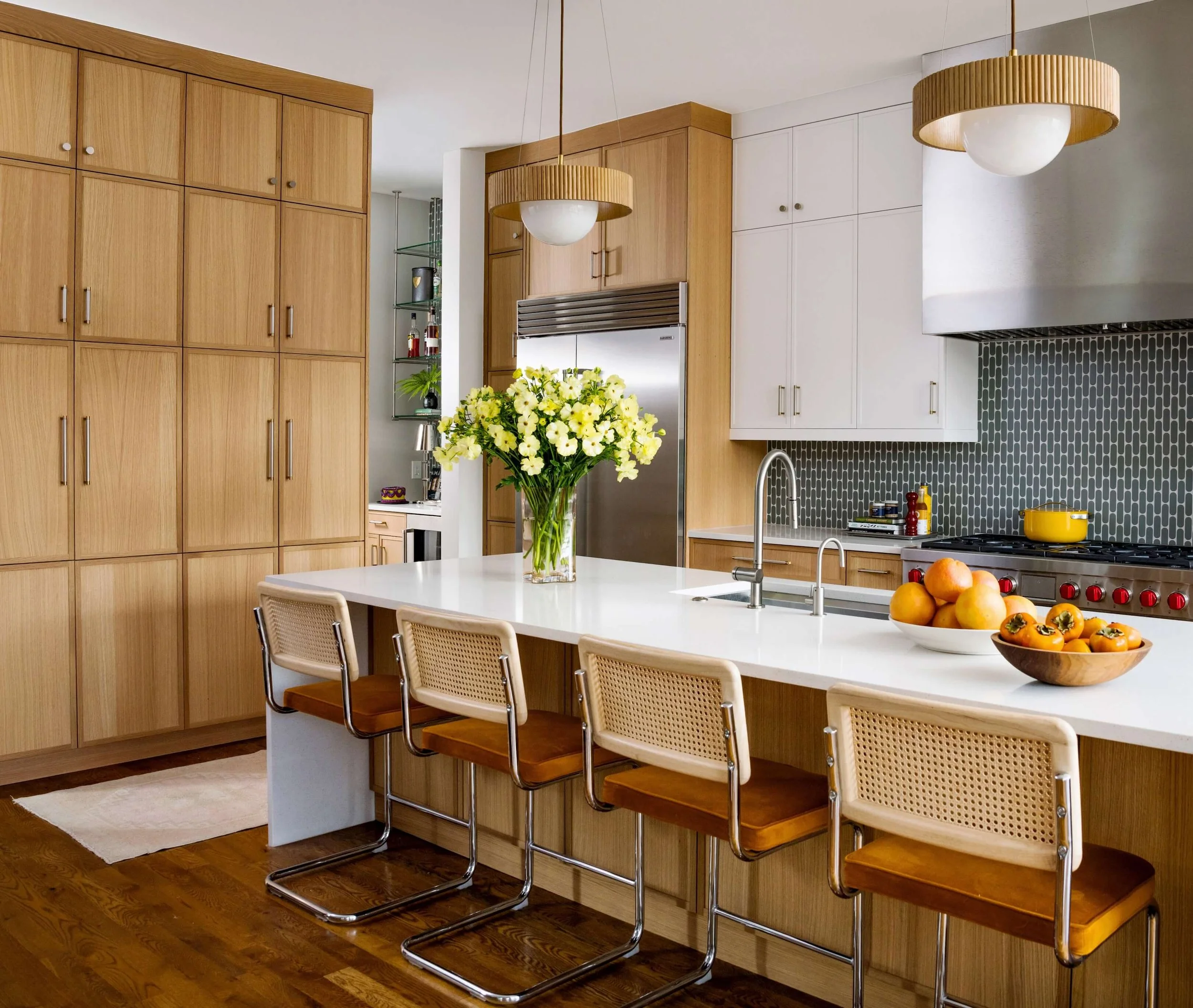
The original kitchen was bright, but already felt dated. White cabinetry, white countertops, gray subway tile, and blue-gray walls created a flat and uninspired space.
While traditional mid-century kitchens often relied heavily on dark walnut cabinetry, we wanted something more open and airy for this home.
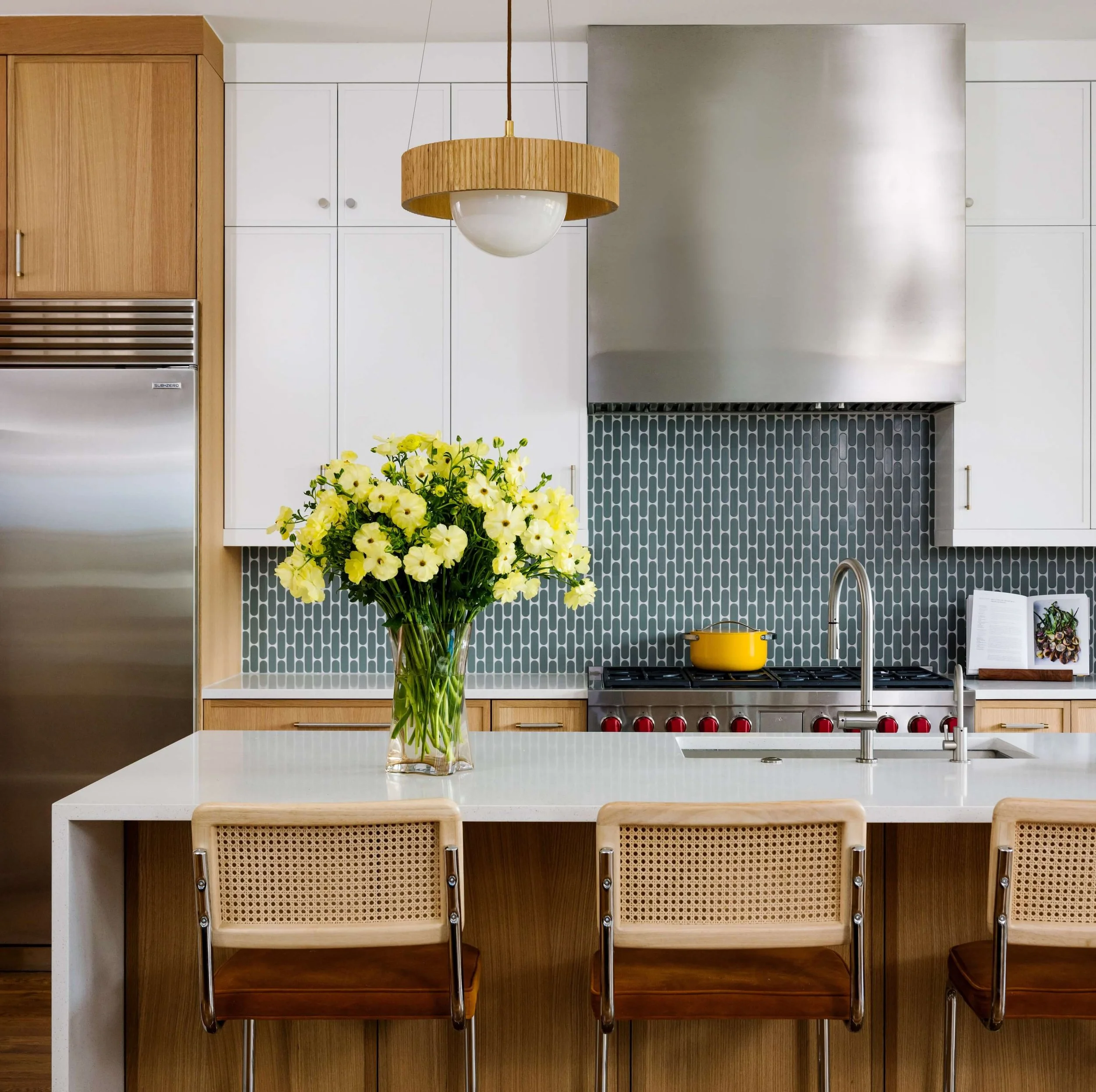
We introduced rift-sawn white oak cabinetry paired with white cabinets to bring warmth without sacrificing light. Traditional shaker cabinet doors were replaced with slimmer, skinny shaker profiles for a more modern look. A fresh aqua backsplash adds color and personality, referencing mid-century geometry without feeling literal or nostalgic.
The result is a kitchen that feels modern, functional, and expressive—clearly inspired by mid-century design, but tailored for contemporary living.
Before & After:
After:
Fireplace Redesign: A Mid-Century Focal Point
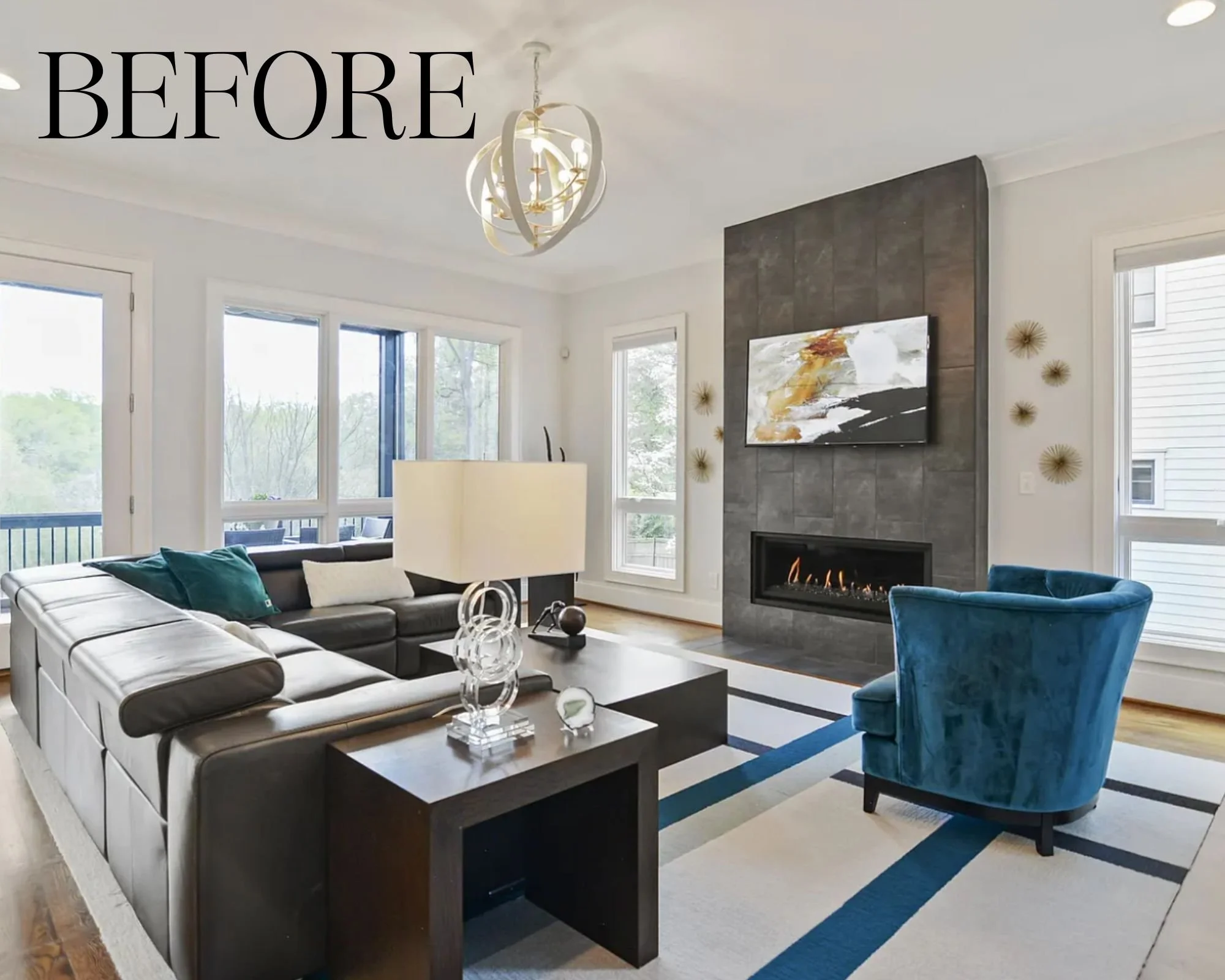
The original linear fireplace felt contemporary but lacked character and didn’t align with mid-century proportions.
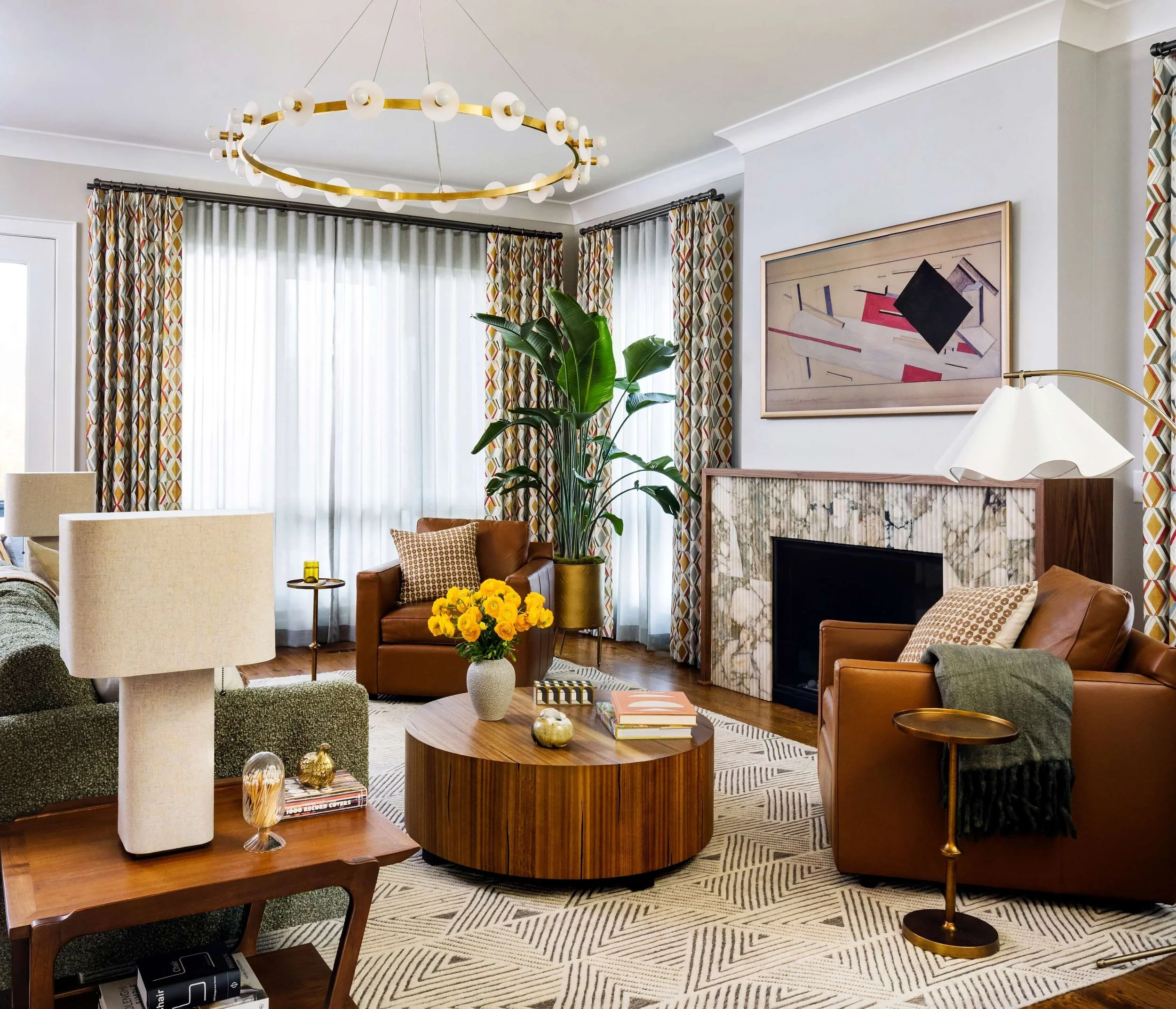
We redesigned it as a square fireplace, a shape more authentic to mid-century modern design. The surround is clad in fluted Calacatta marble, a richly layered stone with notes of green, white, warm gray, and subtle hints of pink.
Walnut is used as a framing element around the marble, bringing warmth and tying the fireplace back to classic mid-century materials without overwhelming the space.
Before & After:
After:
Butler’s Pantry to Home Bar Transformation
One of the most dramatic changes in the renovation occurred in the butler’s pantry.
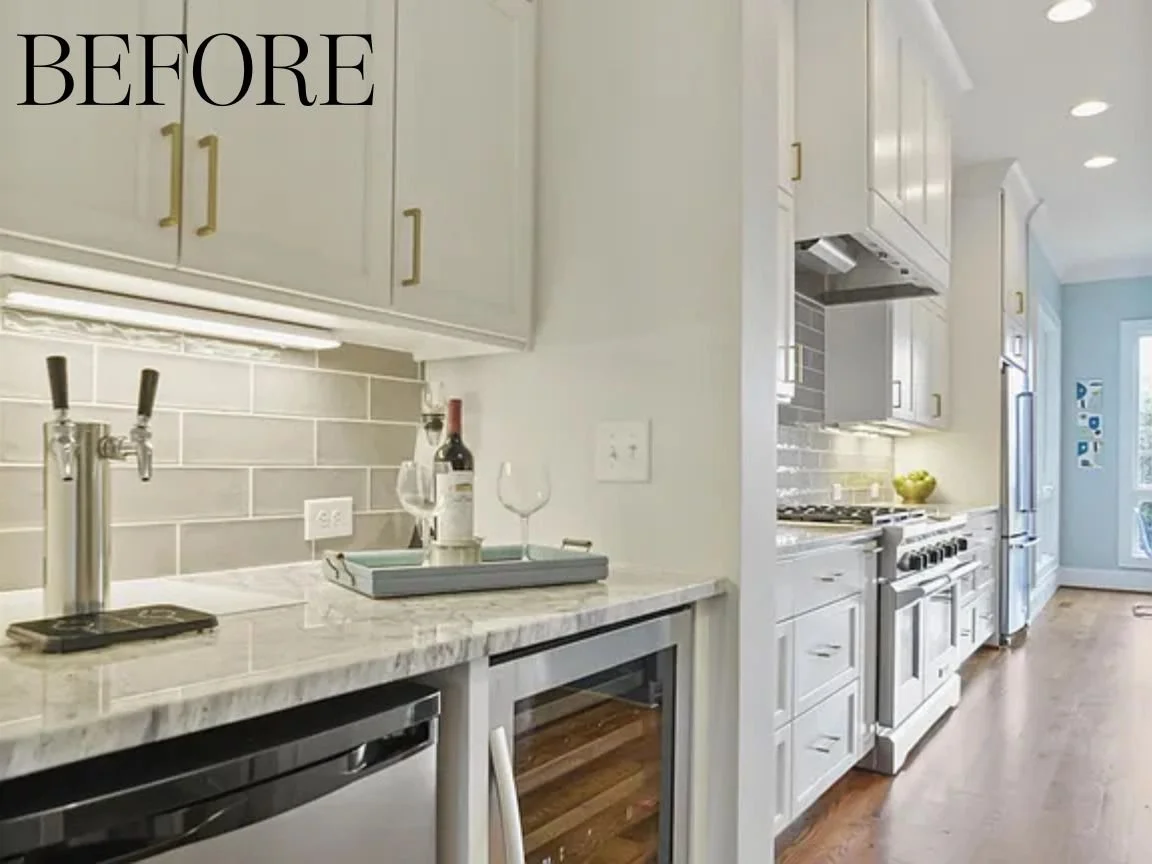
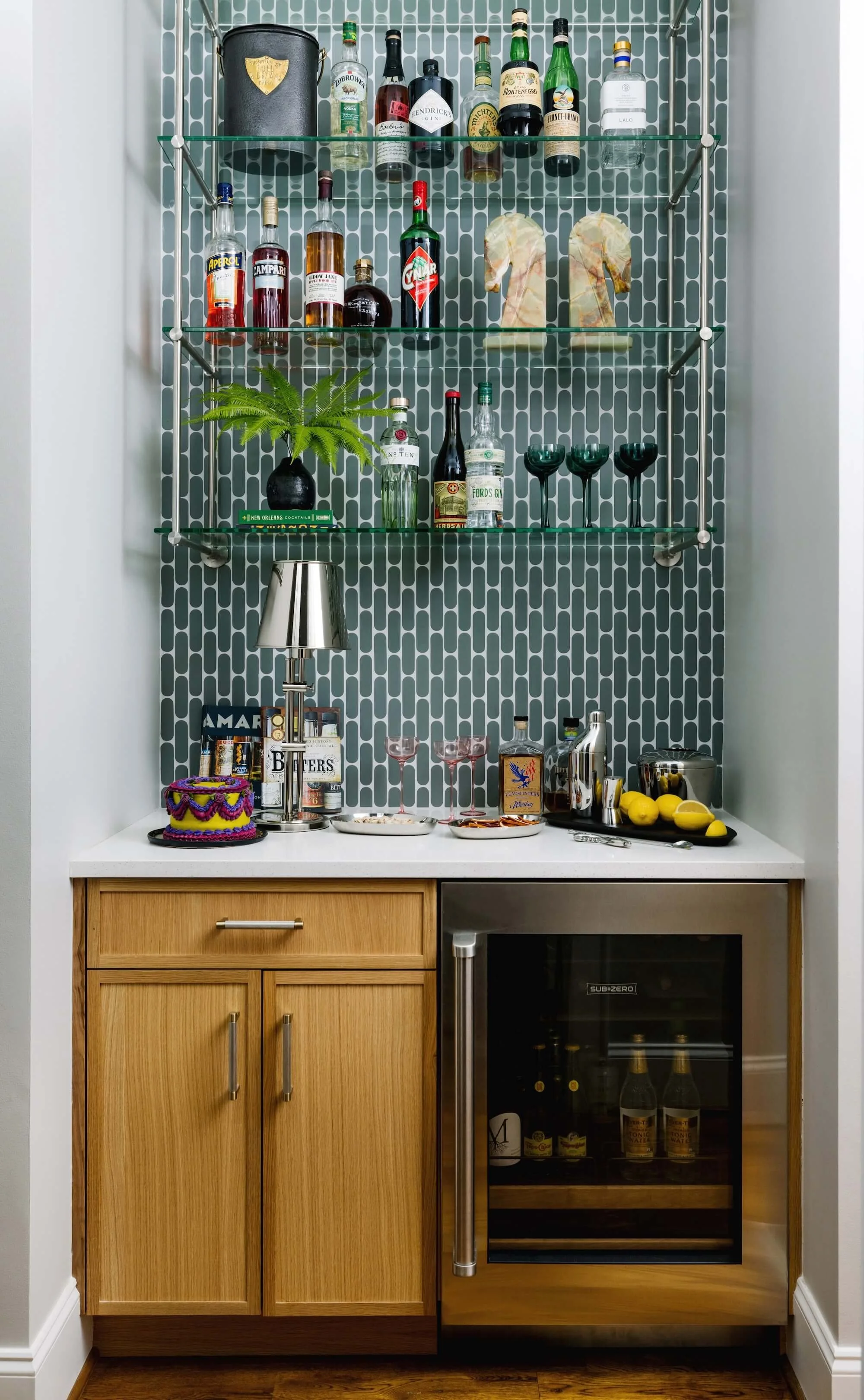
Upper cabinets were removed and replaced with metal and glass open shelving, transforming the space from a standard pantry into a home bar that feels intentional and design-forward. The kitchen backsplash tile continues here to create visual continuity between spaces.
The kegerator was removed in favor of additional storage and counter space, resulting in a more timeless and flexible area suited to both everyday use and entertaining.
Before & After:
After:
Bedroom Updates: Simple Changes with Big Impact
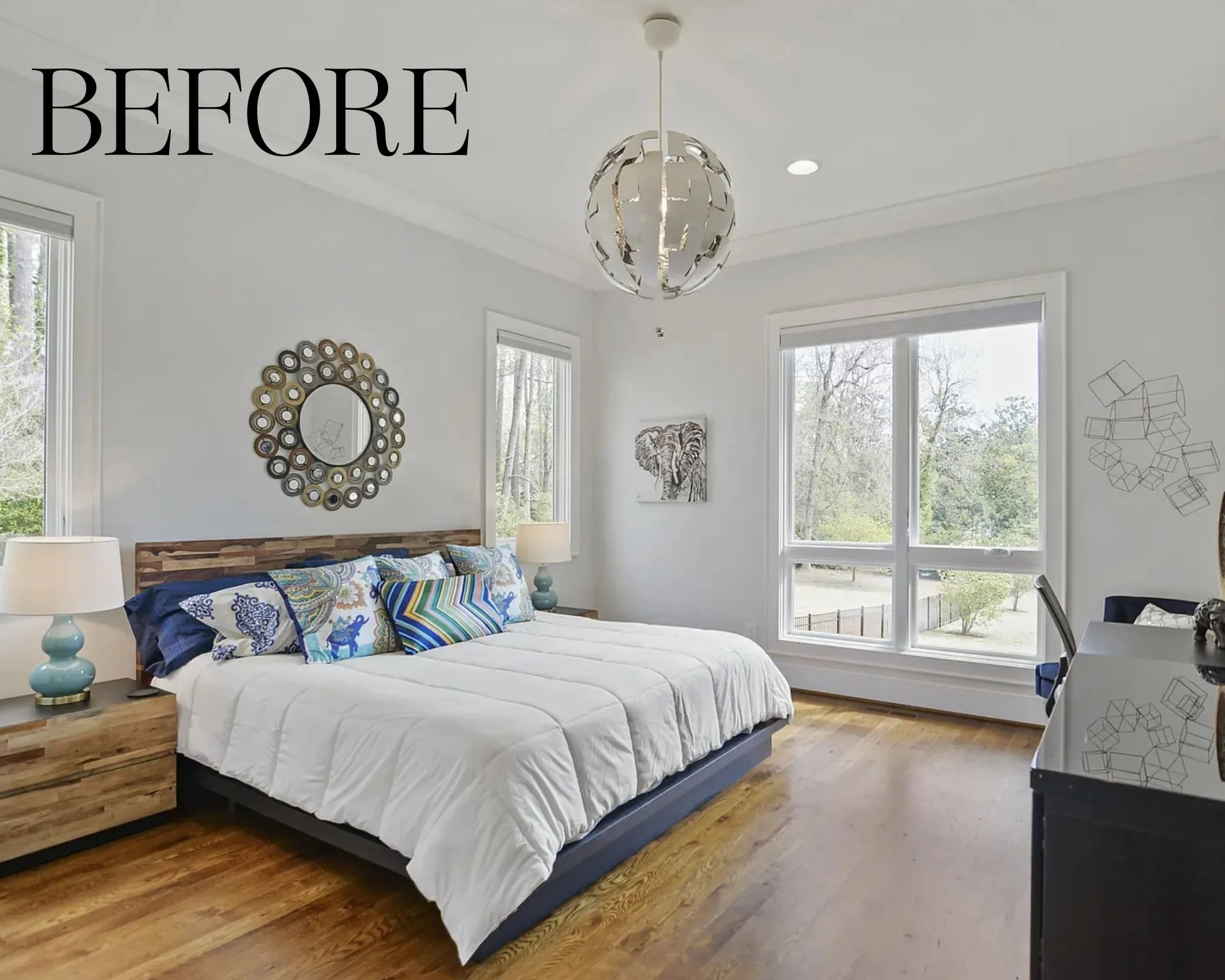
The bedrooms originally featured wall-to-wall carpet, which felt disconnected from the rest of the home’s design direction.
Replacing the carpet with wood flooring instantly made the spaces feel more aligned with mid-century sensibilities and created continuity throughout the house. It’s a relatively simple change, but one that significantly elevates the overall design.
Bathroom Renovations: Honest Materials and Bold Design
Mid-century bathrooms were often small and highly functional. While functionality remained a priority, these updated bathrooms were designed to feel thoughtful, modern, and expressive.
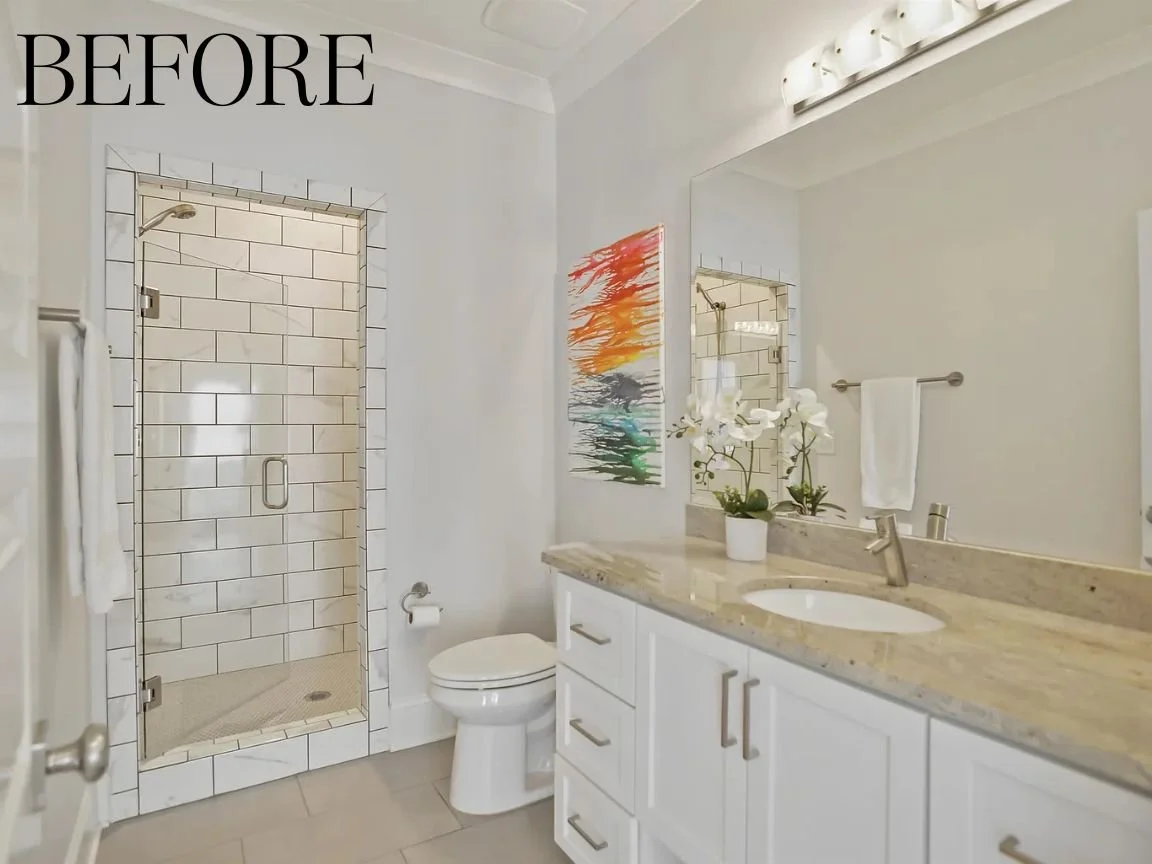
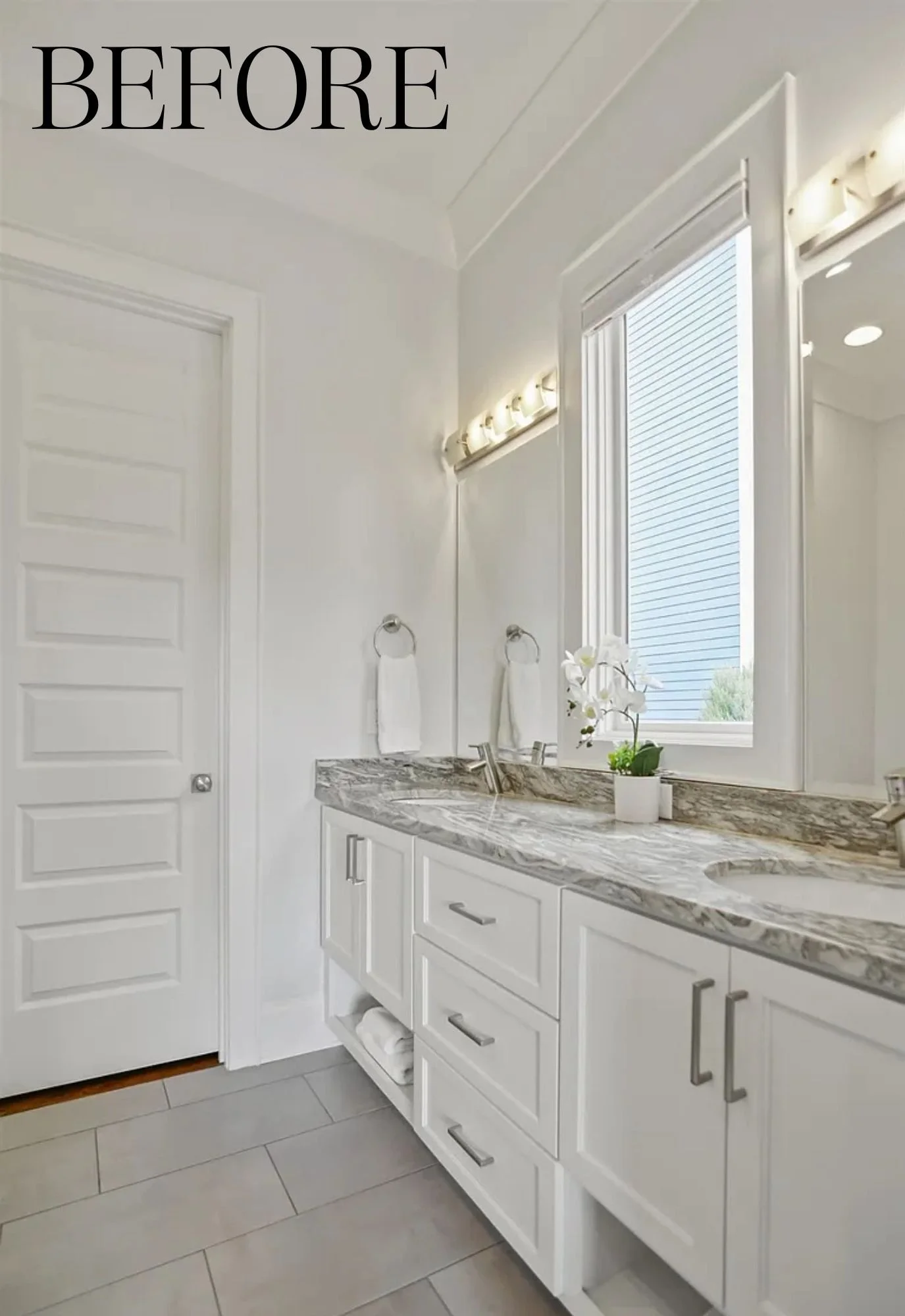
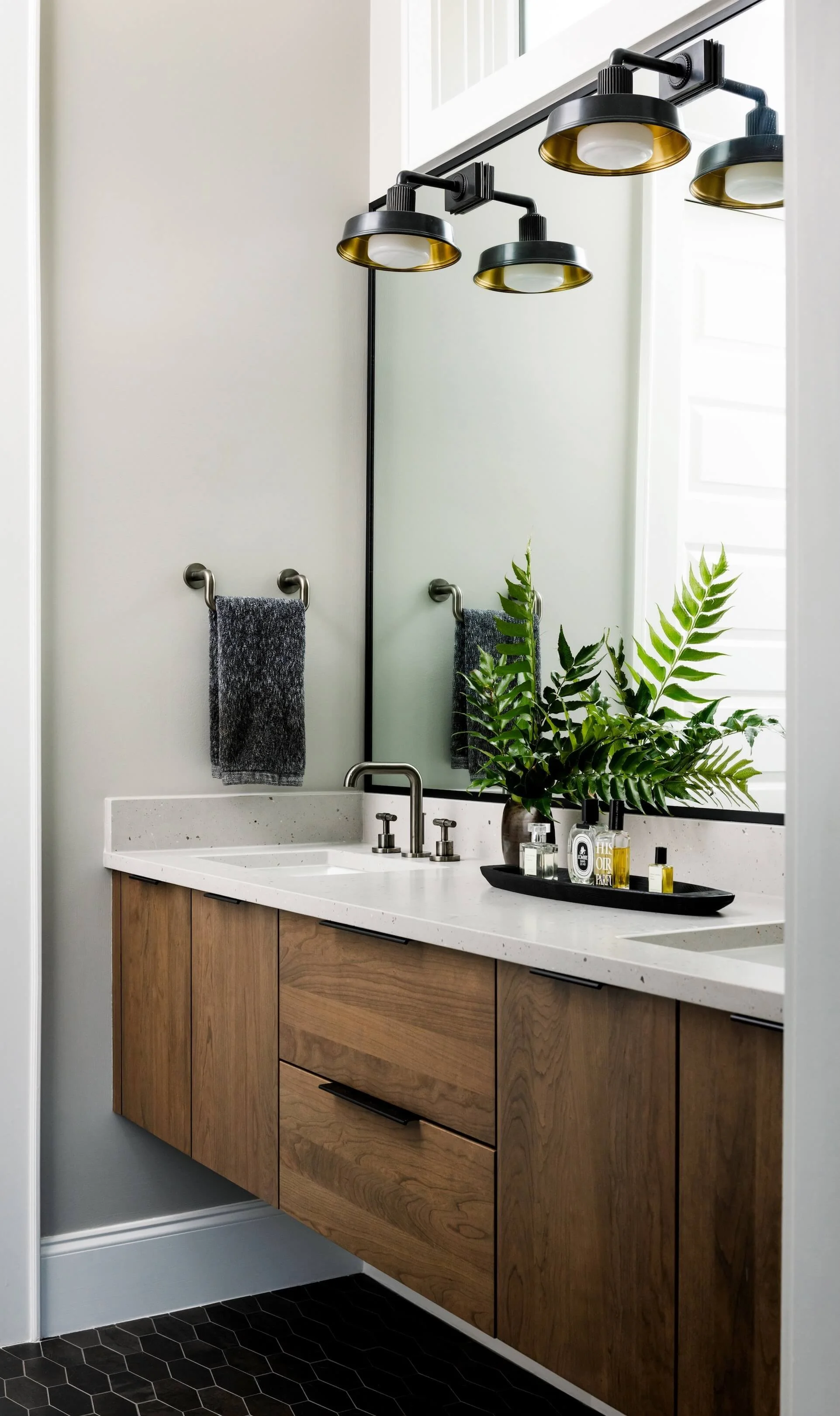
Where possible, existing marble-look shower tile was retained. Bathroom floor tile was replaced with simpler, solid materials—we prefer materials to be what they are, rather than mimicking something else.
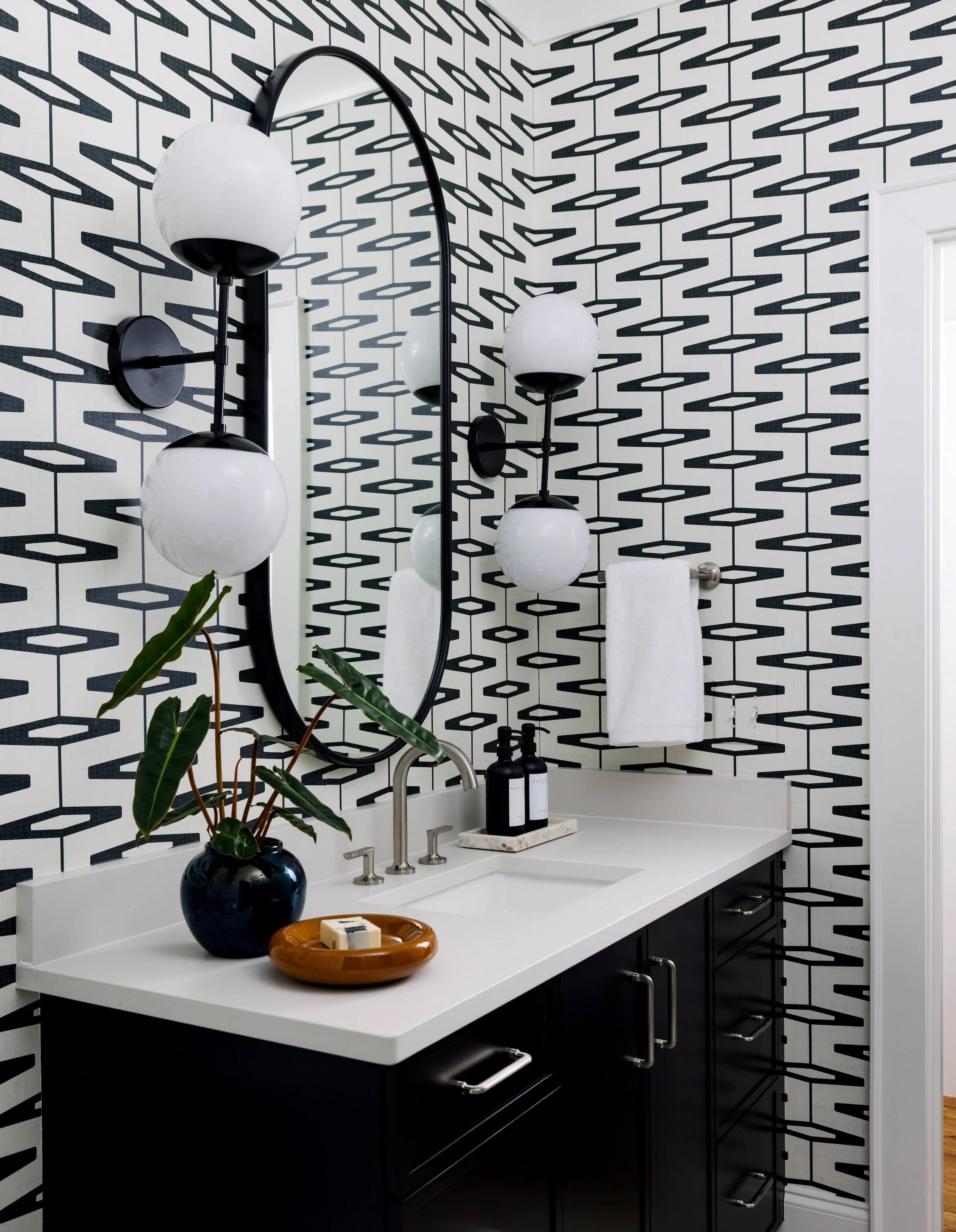
New vanities feature either flat-panel or skinny shaker fronts. In the “dude bathroom,” natural wood flat-panel cabinetry creates a more masculine feel. In the guest bathroom, a black vanity anchors dramatic geometric wallpaper inspired by mid-century patterns, paired with oversized statement sconces.
The powder bath features a round mirror set against a blue tile wall, with rectangular tiles stacked vertically for a clean, modern look.
Each bathroom balances function with moments of visual interest that feel current rather than historically literal.
Before & After:
After:
The Dude Room: Moody, Comfortable, and Timeless
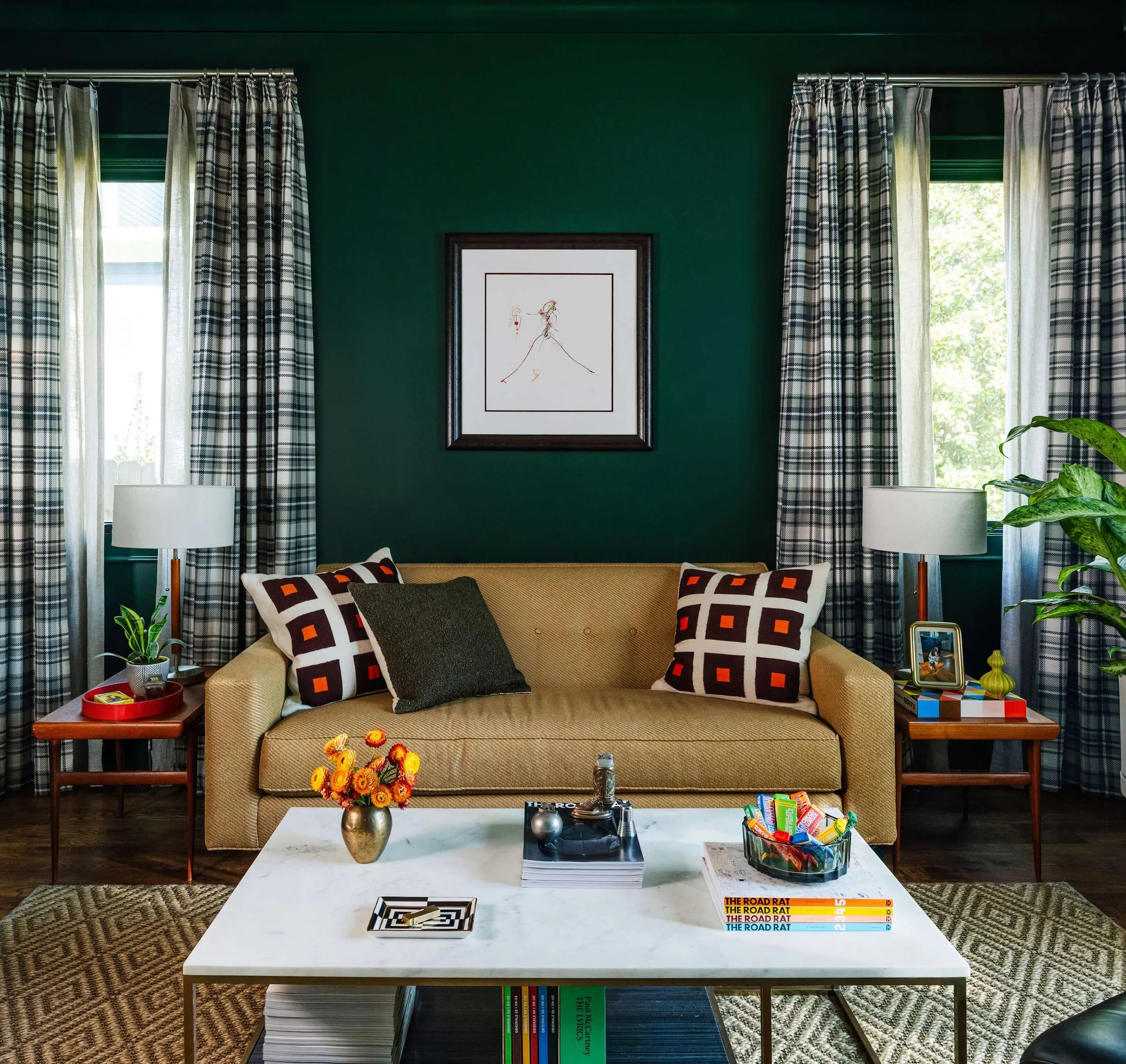
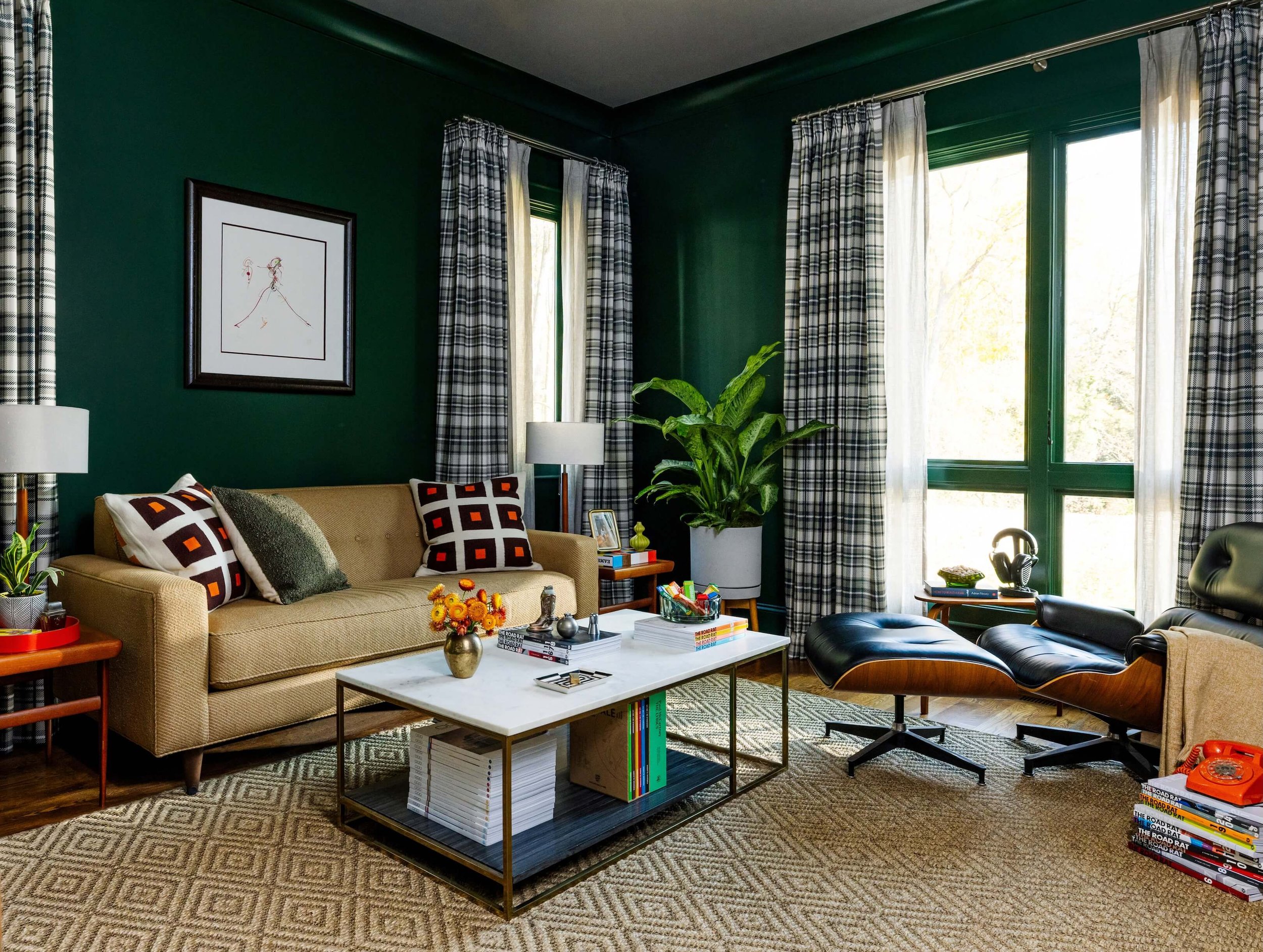
The “dude room” is painted Porsche Green on the walls and trim, with a slightly lighter ceiling to prevent the space from feeling too heavy. The result is a cozy, enveloping room that invites you to relax.
Authentic mid-century furniture pieces anchor the space alongside walnut and metal accents, adding warmth and a sense of history. Comfort was a priority here, as it was throughout the home. True mid-century upholstery is often small-scale and upright, which doesn’t always suit modern lounging.
Upholstered pieces in both the living room and the dude room were selected with today’s lifestyles in mind, ensuring the home feels as good as it looks.
Before & After:
After:
BEFORE
AFTER
Five Takeaways from This Mid-Century Modern Renovation in Raleigh
Be inspired by mid-century modern—don’t recreate it exactly.
Focus on proportions, materials, and geometry rather than strict historical accuracy.Light and livability matter more than rigid material rules.
Lighter woods and thoughtful contrasts can feel just as authentic as darker, traditional finishes.Small architectural changes can transform a space.
Updates like fireplace proportions or cabinet door profiles have an outsized impact on the overall design.Use honest materials whenever possible.
Materials that are what they appear to be feel more intentional, timeless, and refined.Comfort should always be part of the design.
A home should support real life—not just look good in photos.